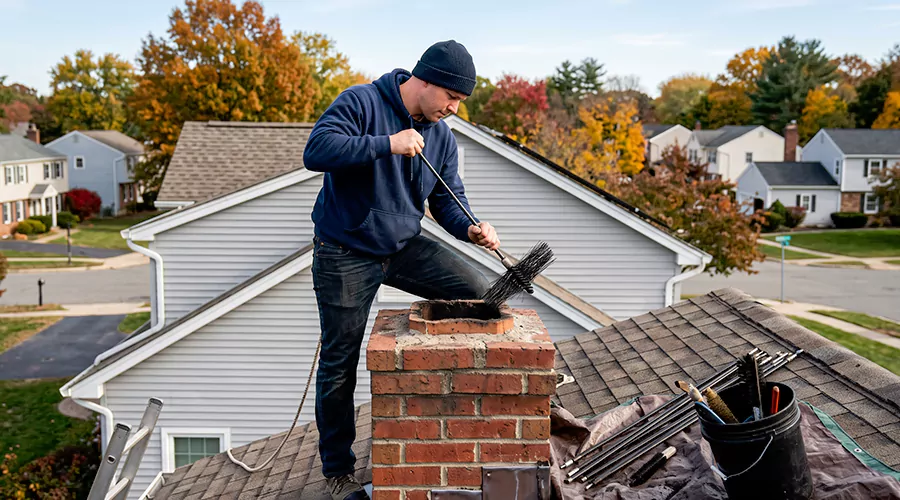
Complete Chimney Maintenance Checklist for Homeowners
Follow a year-round chimney maintenance checklist covering inspections, creosote checks, water damage, masonry care, and seasonal fireplace prep.




Based on 500+ Reviews

Proudly American
Owned & Operated

A chimney maintenance checklist helps homeowners keep their fireplace and chimney system in good condition throughout the year. Regular maintenance can help identify problems such as creosote buildup, water leaks, damaged masonry, blocked vents, and deteriorating components before they become larger repair issues, while a professional chimney inspection can help identify hidden problems that may not be visible during routine maintenance.
A chimney is exposed to heat, smoke, moisture, wind, and temperature changes. Because of this constant exposure, different parts of the chimney system require periodic inspection and care.
This complete chimney maintenance checklist covers the main areas homeowners should monitor to help keep their chimney operating properly.
A chimney does more than remove smoke from a fireplace. It also helps control combustion gases and protects surrounding materials from heat exposure.
Regular maintenance helps:
Many chimney issues develop slowly. Routine checks can help find problems before they affect the entire system.
Inspect the chimney at least once a year
Check for visible damage
Evaluate the condition of the flue
Inspect fireplace components
Look for water intrusion signs
A chimney inspection helps identify problems that may not be visible during normal fireplace use.
The inspection may include checking:
A yearly inspection is especially important before the fireplace is used regularly during colder months.
Look for black deposits inside the firebox
Monitor unusual smoke production
Check for strong smoky odors
Schedule cleaning when buildup is excessive
Wood-burning fireplaces produce smoke particles that can collect inside the chimney.
Over time, these deposits can form creosote, which may restrict airflow and affect chimney performance.
Signs of excessive buildup include:
A chimney cleaning may be needed when buildup becomes significant.
Check that the cap is properly attached
Look for rust or damage
Check protective screens
Remove visible debris
The chimney cap helps protect the chimney opening from:
A damaged chimney cap can allow moisture and blockages into the chimney system.
Common chimney cap problems include:
Replacing a damaged cap can help protect the chimney interior.
Look for cracks
Check for missing sections
Watch for water pooling
Inspect edges for deterioration
The chimney crown sits at the top of many masonry chimneys and helps direct water away from the structure. If the crown becomes cracked or damaged, chimney repair may be needed to prevent moisture from entering the chimney system.
A damaged crown can allow water to enter the masonry.
Signs of crown problems include:
Small crown issues can become larger problems if moisture repeatedly enters the chimney.
Check the area where the chimney meets the roof
Look for gaps or loose metal
Watch for water stains inside the home
Repair damaged flashing quickly
Flashing creates a water-resistant connection between the chimney and roof.
Failed flashing can allow water to enter areas around the chimney.
Warning signs include:
Flashing problems should be corrected before they lead to roof or interior damage.
Inspect bricks for cracks
Check mortar joints
Look for loose bricks
Watch for spalling surfaces
Brick chimneys are exposed to weather throughout the year.
Common masonry problems include:
Water entering damaged masonry can accelerate deterioration.
Confirm the damper opens properly
Confirm it closes completely
Remove visible debris
Check for rust or damage
The damper controls airflow between the fireplace and chimney.
A damaged damper can cause:
A properly working damper improves fireplace performance.
Check firebrick condition
Look for cracks
Inspect mortar joints
Remove excess ash
The firebox experiences direct heat exposure.
Common problems include:
A damaged firebox may require repair to maintain proper protection from heat.
Look for ceiling stains
Check walls near the fireplace
Watch for peeling paint
Notice musty odors
Water problems around chimneys may appear indoors before exterior damage is obvious.
Possible signs include:
Finding moisture early can help prevent larger repairs.
Remove leaves and debris near the chimney
Keep fireplace surroundings clean
Avoid storing flammable materials nearby
The area around the fireplace should remain clean and accessible.
Avoid placing:
A clear fireplace area improves safety.
Schedule inspection
Clean chimney if needed
Check chimney cap
Inspect fireplace components
Test damper operation
Preparing before regular use helps identify problems before they interrupt fireplace operation.
Burn appropriate fuel
Avoid overloading the fireplace
Monitor smoke behavior
Watch for unusual smells
Check for draft problems
Pay attention to changes during operation.
Warning signs include:
Remove remaining ashes
Check for visible damage
Close damper if appropriate
Inspect for moisture problems
End-of-season checks can help identify issues before they become worse during the off-season.
| Chimney Component | Maintenance Task |
|---|---|
| Flue liner | Inspect for cracks and damage |
| Firebox | Check bricks and mortar |
| Damper | Verify operation |
| Chimney cap | Check damage and blockage |
| Crown | Inspect cracks and water protection |
| Flashing | Check roof seal |
| Masonry | Look for cracks and deterioration |
| Fireplace | Remove ash and inspect condition |
A small leak can eventually damage:
Address moisture problems early.
Many chimney issues develop before visible symptoms appear.
Regular inspections can identify problems sooner.
Avoid burning:
These materials can create excessive smoke and deposits.
Applying surface patches over damaged masonry or leaks may hide symptoms without fixing the cause.
Proper repairs should address the source of the problem.
Most chimney systems should be inspected annually.
Additional maintenance may be needed when:
The exact maintenance schedule depends on chimney type, fuel source, and condition.
A complete chimney maintenance checklist helps homeowners monitor important parts of their fireplace and chimney system. Regular inspections, cleaning when needed, checking for water damage, and maintaining exterior components can help prevent larger problems.
Important maintenance tasks include inspecting the flue, checking the chimney cap, examining masonry, maintaining flashing, monitoring creosote buildup, and addressing small problems before they become major repairs.
A well-maintained chimney performs more efficiently and helps provide safer fireplace operation throughout the year.
Most chimneys should be inspected at least once a year. Cleaning frequency depends on fireplace use and buildup.
Regular inspection is one of the most important tasks because it helps identify hidden problems early.
Yes. Weather exposure, moisture, and animals can still affect chimney condition even when it is not used frequently.
Signs may include excessive soot, creosote buildup, smoke problems, or reduced fireplace performance.
Homeowners should monitor the chimney cap, crown, flashing, masonry, firebox, damper, and signs of leaks.
Regular maintenance can help identify smaller problems before they develop into larger and more expensive repairs.
Follow a year-round chimney maintenance checklist covering inspections, creosote checks, water damage, masonry care, and seasonal fireplace prep.
